★ IRAN
-
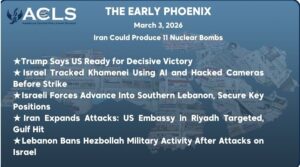
Iran Could Produce 11 Nuclear Bombs, U.S. Envoy Witkoff Says
Steve Witkoff, Middle East envoy for former U.S. President Donald Trump, revealed that Iran openly aimed to enrich uranium for nuclear weapons during negotiations. Despite U.S. offers, Iran refused a decade-long halt, boasting 460 kg of 60% enriched uranium—enough for 11 bombs—and evading international monitors. Talks collapsed as U.S. officials realized Iran sought weapons, not compromise.
-
Trump Says US Ready for Decisive Victory
President Donald Trump declared that the United States has larger and better munitions stockpiles than ever and is fully prepared for a decisive victory. This comes as the US Central Command carried out strikes on Iranian military airports, Revolutionary Guard command centers, air defenses, and missile and drone sites.
-
Israel Tracked Khamenei Using AI and Hacked Cameras Before Strike
Israel reportedly used artificial intelligence and hacked traffic cameras to monitor Ali Khamenei’s routines, movements, and key associates ahead of Operation Roaring Lion. The strike involved 30 Sparrow missiles, daylight timing, and disrupted local networks to prevent alerts. Mossad and U.S. intelligence helped confirm his location, with AI and data analysis guiding planners to minimize collateral damage.
-
Satellite Images Show Attack On Iranian Nuclear Site
An independent institute reported that satellite imagery from Venture Satellite Company revealed apparent strikes on Iran’s Natanz Nuclear Facility, destroying three buildings, including entrances to underground uranium enrichment halls with thousands of centrifuges. Former UN inspector David Albright confirmed the timing between Sunday afternoon and Monday morning, though it remains unclear whether the strikes were carried out by the United States or Israel.
-
Israel Reports 1,000–1,500 Iranian Forces Killed in Three Days
Israeli sources estimate 1,000–1,500 members of Iran’s Revolutionary Guard and security forces were killed in three days of strikes, with some estimates higher. Israeli-American operations have damaged Revolutionary Guard, Basij, and government facilities, including a major strike in Tehran. Israel has intensified air operations to prevent Iranian forces from regrouping.
==========
★ ISRAEL
-
Israel Strikes Tehran Leadership and Key Sites
The Israeli Air Force carried out major strikes in Tehran under “Operation Roaring Lion,” hitting the Presidential Office, Supreme National Security Council, and sites linked to slain Supreme Leader Ali Khamenei. Over 2,500 munitions targeted 600+ locations, including command systems, missile launchers, air defenses, and the Islamic Republic of Iran Broadcasting headquarters. Residents of Northern Tehran were warned ahead of the attacks.
==========
★LEBANON
-
Hezbollah Strikes Israeli Base, Israel Hits Southern Beirut
Lebanese media reported that Israeli Israel Defense Forces conducted airstrikes on Hezbollah positions in southern Beirut, targeting command centers and weapons depots, including the party’s Al-Nour Radio and Al-Manar TV. Hezbollah retaliated with drones against radar and control sites at Ramat David Air Base.
-
Israeli Forces Advance Into Southern Lebanon, Secure Key Positions
The Israeli army conducted a limited ground incursion into southern Lebanon, deploying troops near the border to establish forward defenses and control strategic sites, targeting Hezbollah infrastructure. Despite minimal evacuation of local residents, Israel aims to neutralize rocket threats and prevent infiltration. Lebanese authorities condemned Hezbollah’s actions, emphasizing the state’s monopoly on the use of force amid rising regional tensions.
-
Israel Assassinated Hezbollah-Iran Liaison Reza Khazai
The Israel Defense Forces said it killed Reza Khazai, Hezbollah’s military expansion chief in Beirut, during a naval strike guided by Israeli military intelligence. Khazai, described as the right hand of Hezbollah’s Lebanon Corps commander, coordinated arms transfers and military support from Iran, helping rebuild capabilities and align the group’s operations with Tehran.
-
Lebanon Bans Hezbollah Military Activity After Attacks on Israel
Following Hezbollah’s rocket and drone strikes on Israel in retaliation for Iran’s Supreme Leader’s death, Lebanon’s government banned all military actions by the group and demanded it hand over its weapons. The move, rejected by senior Hezbollah officials, signals a historic shift in state authority, while Israeli airstrikes killed dozens, and the conflict spreads across the region.
==========
★THE GULF
-
Iran Expands Attacks: US Embassy in Riyadh Targeted, Gulf Hit
Iran launched coordinated strikes across the Gulf, hitting Dubai and Abu Dhabi in the UAE, Doha in Qatar, Kuwait, and the US Embassy in Riyadh with drones, causing fires. The US urged citizens to seek shelter, while President Trump warned of a strong response. The attacks also killed six US soldiers in Kuwait during an Iranian strike on a temporary operations center.
-
Qatar Downs Iranian Jets As Gulf Energy Crisis Escalates
Qatar shot down two Sukhoi Su-24 aircraft after Iran expanded attacks on Gulf states, including Saudi Arabia and the United Arab Emirates, hitting oil and gas facilities. QatarEnergy suspended LNG production at two sites. European gas and oil prices surged amid fears of further disruption. Meanwhile, Kuwait and Bahrain reported casualties from intercepted missiles, and limited flights resumed in the UAE after initial shutdowns.
==========
★TURKIYE
-
Türkiye Closes Borders With Iran, Restricts Trade Temporarily
Türkiye temporarily closed three border crossings with Iran for daily travelers but kept trade routes open, authorities said. The Presidency’s Center for Combating Disinformation denied attacks on US bases and stressed full control over Turkish territory. Regional tensions hit the Turkish lira, which fell to 43.97 per US dollar, prompting the Central Bank of Türkiye to sell $5 billion in foreign currency and halt one-week repo auctions.
========
★ Disclaimer: This publication is a digest of various news sources compiled by the Early Phoenix team and edited by Rania Kisar. The items are curated, concise summaries of news items hyperlinked within each story. The items and summaries presented do not necessarily represent the views of the American Center for Levant Studies.