★UNITED STATES
-
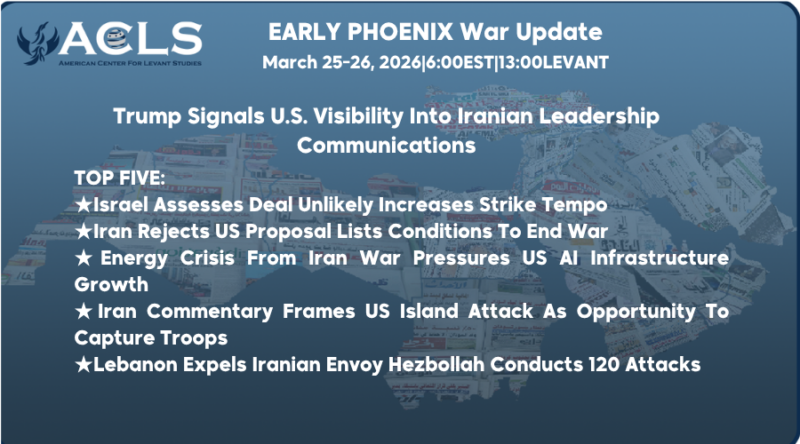
Trump Signals U.S. Visibility Into Iranian Leadership Communications
President Donald J. Trump said U.S. operations against Iran are “winning so big” and that Iran “wants[s] to make a deal” but fears internal retaliation and U.S. action. He said the United States “listen[s]” to Iranian communications showing leadership reluctance, including statements they “don’t want” the role. Trump said U.S. forces are “decimating” Iran, intercepted 100 missiles with none penetrating defenses, and “knocked out” nuclear capability that he said was weeks from completion. U.S. envoy Steve Witkoff and Iranian Foreign Minister Abbas Araghchi held a direct call described by officials as a turning point that opened a negotiation channel toward a potential agreement, with Iranian leadership approval, according to reporting . Israeli officials said they were not part of the talks and learned of the contact through a third party.
============
★ISRAEL
-
Israel Assesses Deal Unlikely Prepares For Possible Trump Ceasefire
Israeli officials assessed a U.S.-Iran deal remains unlikely due to opposing positions but warned Donald Trump could still announce a temporary ceasefire. Israel is preparing for that scenario through security consultations, while U.S. officials said negotiations remain ongoing with potential meetings planned. Israeli officials also said certain Iranian leaders were not targeted to preserve negotiation channels, as strikes continue against missile, drone, and military infrastructure aimed at degrading launch capabilities.
-
Israel Increases Strike Tempo During Last Forty-Eight Hours
Israeli military officials said more than 600 strike sorties targeted Iran’s ballistic missile infrastructure, including launchers, storage sites, and production facilities over recent days. The military said operations focus on degrading the missile network from production through launch capability. Israeli strikes have targeted infrastructure across Tehran, Isfahan, and additional cities as part of ongoing operations against Iran’s military systems.
-
Israeli Brothers Accused Of Deceiving Iranian Intelligence Using AI
Israeli court documents allege two Israeli citizens used artificial intelligence tools to fabricate military information, fake identities, and coordinates, obtaining more than 100,000 shekels from Iranian intelligence in a deception operation. The case includes claims that false reporting led to the detention of an Iranian citizen, while defendants face charges of contact with a foreign agent and supplying misleading information.
==========
★IRAN
-
Iran Rejects US Proposal Lists Conditions To End War
An Iranian official told Press TV that Tehran rejected a U.S. proposal and outlined five conditions, including halting attacks and guaranteeing no renewed conflict. The conditions also included reparations, ending fighting across all fronts, and recognition of Iran’s authority over the Strait of Hormuz. The official said no negotiations will occur before these conditions are met and emphasized Iran will determine the timing of the war’s end.
-
Iran Claims Seventy Ninth Strike Wave Targets US Israeli Assets
Iranian state media said Iranian forces conducted the 78th and 79th waves of “Operation True Promise 4,” targeting Israeli sites in Tel Aviv, Dimona, and Eilat and U.S. bases in the region using ballistic missiles and drones . The report also said Iranian army units targeted Rafael defense industries, Ben Gurion Airport assets, and a U.S.-linked site in Erbil, while allied groups in Lebanon and Iraq carried out additional attacks against Israeli and U.S. positions.
-
Energy Crisis From Iran War Pressures US AI Infrastructure Growth
Rising energy costs linked to the conflict with Iran are increasing pressure on U.S. technology firms including Microsoft, Alphabet, and Nvidia, affecting data center expansion and artificial intelligence development, according to industry reports. Analysts said higher electricity prices and supply instability are forcing companies to reassess investments, delay projects, and shift infrastructure to regions with more stable and lower-cost energy.
-
Iran Commentary Frames US Island Attack As Opportunity To Capture Troops
Iranian commentators and former IRGC-linked figures said a potential U.S. attempt to seize Iranian islands could enable Tehran to capture American troops and impose political costs on Washington. Iran’s parliament speaker Mohammad-Baqer Qalibaf warned that any regional country assisting efforts to seize Iranian islands would face strikes on its vital infrastructure, citing intelligence about a possible operation. He said Iran is monitoring all movements and would retaliate without limitation.
-
Oil Prices Whipsaw As Hormuz Disruptions And Ceasefire Signals Shift
Global oil prices surged to about $102 Brent and $90 U.S. crude on supply risks tied to Strait of Hormuz disruptions, then fell nearly 6 percent on reports of a U.S. ceasefire proposal and possible talks with Iran, before rebounding above $100 after Iran signaled a negative response, as constrained shipping continues to pressure global energy markets.
-
China Shipping Resumes Gulf Container Bookings After Regional Suspension
China’s COSCO Shipping Lines said it resumed accepting new bookings for general cargo containers to the UAE, Saudi Arabia, Bahrain, Qatar, Kuwait, and Iraq after suspending services earlier this month. Iran’s Foreign Minister Abbas Araghchi said Iran will continue retaliatory measures until the United States and Israel regret their actions, during a call with China’s foreign minister. Iran announced it was screening ships, imposing payments made to transit, and blocking what it referred to as hostile vessels to transit. The Strait of Hormuz. The communication was circulated to 176 IMO member states as disruptions continue affecting global oil and LNG flows. Iran’s Islamic Revolutionary Guard Corps said it turned back the container ship SELEN from the Strait of Hormuz. IRGC naval commander Alireza Tangsiri said the vessel lacked transit authorization and failed to comply with Iranian maritime protocols.
-
Iran Arrests Four Hundred Sixty Six In Nationwide Security Crackdown
Iranian police arrested 466 individuals across multiple provinces following intelligence and technical monitoring, accusing them of links to enemy networks and activities undermining national security, according to state media. Authorities said the arrests are part of a broader internal security campaign during the war, with more than 1,000 detentions reported this month, including individuals accused of sharing information with foreign-based media outlets.
-
Iran Missile Launch Rates Decline Following Israeli Strikes On Infrastructure
Israeli military officials said Iranian missile launch rates dropped significantly from initial plans of hundreds of missiles to roughly 10 launches per day following sustained strikes on launchers and production systems. Iran’s Khatam al-Anbiya Central Headquarters commander Major General Ali Abdollahi said Iranian armed forces will continue operations until complete victory, according to state media.
-
Iran Linked Networks Expand Attacks Targeting US Israeli Interests Europe
Multiple attacks targeting Jewish, Israeli, and U.S.-associated sites were reported across Europe including arson, explosions, and attempted attacks on synagogues and schools in the United Kingdom, Belgium, and the Netherlands, according to security analysis . Analysts said Iran-linked networks are increasingly using proxies, sleeper agents, and local criminal recruits to conduct operations across multiple countries.
=========
★LEBANON
-
Lebanon Expels Iranian Envoy Hezbollah Conducts 120 Attacks
An Iranian ballistic missile landed near Beirut during a broader strike wave targeting Israel, with conflicting reports on interception or impact. The incident followed Lebanon expelling Iran’s ambassador, ordering departure by March 29, and recalling its envoy from Tehran, citing diplomatic violations. Authorities signaled possible measures against Iranian-linked activity, including action against IRGC elements and visa restrictions. Israel said forces will occupy southern Lebanon up to the Litani River and control bridges and key terrain. Hezbollah fired missiles toward central Israel, injuring civilians, while two Israeli soldiers were seriously wounded in Lebanon.
=========
★GULF STATES
-
Iran Attacks Gulf States With Over Four Thousand Missiles Drones
Iran launched more than 4,350 missiles and drones toward Gulf states over 24 days, targeting infrastructure across Saudi Arabia, the UAE, Kuwait, Qatar, and Bahrain, according to regional reporting. The attacks prompted increased Gulf defense coordination and diplomatic actions, with officials warning future relations with Iran will depend on changes in its regional behavior.
-
Kuwait Foils Second Hezbollah Linked Plot Targeting State Officials
Kuwait’s Interior Ministry said state security disrupted a Hezbollah-linked network of six suspects planning assassinations of senior officials, marking a second foiled plot after authorities on March 17 dismantled a larger cell of 16 individuals. Earlier seizures included firearms, explosives, drones, and encrypted communications equipment, with additional suspects identified abroad as investigations continue following referrals to prosecutors.
===========
★ Disclaimer: This publication is a digest of various news sources compiled by the Early Phoenix team and edited by Rania Kisar. The items are curated, concise summaries of news items hyperlinked within each story. The items and summaries presented do not necessarily represent the views of the American Center for Levant Studies.