★UNITED STATES
-
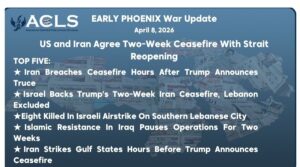
US and Iran Agree Two-Week Ceasefire With Strait Reopening
The United States and Iran have agreed to a two-week ceasefire, conditioned on Tehran reopening the Strait of Hormuz and halting attacks. Pakistan confirmed the ceasefire is now in effect and extends to allied groups across the Middle East, though Israel disputes the inclusion of Lebanon. The deal, mediated by Pakistan, allows Iran to pause counterstrikes, ensures safe passage through the strait, and invites both delegations to Islamabad on April 10 for talks to convert the temporary pause into a lasting agreement. The framework also includes cessation of Iran-aligned group conflicts, US troop withdrawals, sanctions relief, compensation, and financial unfreezing.
-
Global Markets Rally After U.S.-Iran Temporary Ceasefire
Global financial markets surged after Donald Trump announced a two-week pause on attacks against Iran, signaling progress toward a long-term peace deal. U.S. stocks rose 1.5–2%, gold gained 2.5%, silver 5%, oil fell below $100, and the dollar weakened. Markets anticipate easing inflation pressures and potential Federal Reserve rate cuts later this year.
===========
★IRAN
-
Iran’s Parliament Speaker Leads Negotiations With US in Islamabad
Iranian Parliament Speaker Mohammad Bagher Ghalibaf will lead Tehran’s delegation in negotiations with the United States in Islamabad on Friday, a first for his office, traditionally headed by Foreign Minister Abbas Araqchi. The talks, arranged by Pakistani Prime Minister Shehbaz Sharif, aim to reach a final agreement to resolve all disputes, following the recent US-Iran ceasefire.
-
Iran Breaches Ceasefire Hours After Trump Announces Truce
Iran launched missiles at Israel and Bahrain hours after Donald Trump announced a two-week ceasefire involving the US, Israel, and Iran, triggering regional alerts and strikes. Despite Iran accepting the truce with warnings, continued attacks, and Israeli skepticism, there were doubts about the fragile agreement.
-
Iran Faces Heavy Military Losses, Entering Ceasefire Under Pressure
Iran enters a ceasefire weakened by extensive losses to its military and strategic infrastructure, including a third of its missile and drone arsenal destroyed, damage to key facilities, and erosion of its regional proxy networks. Despite retaining some capabilities, U.S. and Israeli strikes have substantially reduced effectiveness, while underground storage and nuclear sites remain under surveillance, highlighting Tehran’s constrained position.
-
India To Receive First Iranian Oil Shipment In Seven Years
India is set to import its first Iranian oil cargo since 2019 after temporary U.S. sanctions relief, with the vessel Jaya en route to the east coast. The shipment follows supply disruptions from the U.S.-Israel conflict, while Indian refiners face no payment issues. Another tanker, Jordan, is also heading to India, reflecting Tehran’s growing crude exports amid elevated global stock levels.
===========
★ISRAEL
-
Israel Backs Trump’s Two-Week Iran Ceasefire, Lebanon Excluded
Israel supports Donald Trump’s two-week suspension of strikes on Iran, conditional on Tehran reopening the Strait of Hormuz and halting attacks. Negotiations between the U.S. and Iran begin on April 10 in Islamabad. Israel clarified that Lebanon is excluded from the truce, while its campaign there has killed at least 1,500 and displaced 1.2 million people.
===========
★LEBANON
-
Eight Killed In Israeli Airstrike On Southern Lebanese City
An Israeli airstrike on Tyre killed at least eight people and wounded 22, hitting the city’s waterfront and a café. Fires were extinguished by local teams while the Lebanese army secured the area. The strike is part of ongoing retaliatory attacks following Iran-backed Hezbollah missile launches, amid broader U.S.-Iran regional tensions.
===========
★IRAQ
-
Islamic Resistance In Iraq Pauses Operations For Two Weeks
The Iran-backed Islamic Resistance in Iraq announced a two-week suspension of operations across Iraq and the region following a U.S.-Iran ceasefire. Iraq welcomed the truce, with its Foreign Ministry praising the move as reducing tensions, promoting regional stability, and calling for sustained dialogue, full adherence to the ceasefire, and avoidance of actions that could reignite conflict.
-
Explosions Hit Baghdad, Fire Erupts At U.S. Diplomatic Support Center
Air defenses in Baghdad intercepted three drones that fell into the Tigris River, while a missile struck Al-Amiriya, injuring two civilians. Two other missiles hit the U.S. Diplomatic Support Center at the airport, causing a fire. The U.S. embassy activated its counter-rocket systems amid ongoing attacks by Iran-backed Iraqi militias targeting American sites.
-
US Secures Release of Journalist Abducted in Baghdad
American journalist Shelley Kittleson, kidnapped on March 31 near Baghdad’s Palestine Hotel, has been released, U.S. officials confirmed. Her captors, identified as members of Iran-aligned Kataib Hezbollah, conditioned her release on immediate departure from Iraq. Secretary of State Marco Rubio praised the safe return, while the group circulated a video of Kittleson claiming she had gathered information on Shiite armed factions for the U.S. consul. Kittleson is a veteran reporter with extensive coverage of Middle East conflicts.
===========
★GULF STATES
-
Iran Strikes Gulf States Hours Before Trump Announces Ceasefire
Iran launched coordinated missile and drone attacks across Gulf states early Wednesday, hours before Donald Trump announced a two-week ceasefire. Saudi, Qatari, Emirati, Kuwaiti, and Bahraini defenses intercepted multiple attacks, containing damage and fires. Despite the truce offer tied to Hormuz shipping, ongoing assaults highlight persistent regional threats and raise doubts about lasting peace.
===========
★ Disclaimer: This publication is a digest of various news sources compiled by the Early Phoenix team and edited by Rania Kisar. The items are curated, concise summaries of news items hyperlinked within each story. The items and summaries presented do not necessarily represent the views of the American Center for Levant Studies.