

★USA
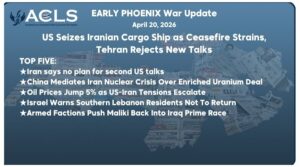
US Seizes Iranian Cargo Ship as Ceasefire Strains, Tehran Rejects New Talks
Tensions between the US and Iran escalated after Washington seized an Iranian cargo vessel accused accused Iran of violating a blockade, prompting threats of retaliation from Tehran. The fragile ceasefire appears close to collapse as Iran rejects new talks, oil routes remain disrupted, and both sides exchange warnings amid rising regional instability.
China Mediates Iran Nuclear Crisis Over Enriched Uranium Deal
China is reportedly offering to handle Iran’s highly enriched uranium stockpile, potentially hosting or supervising its reduction, as part of emerging diplomatic efforts in US–Iran negotiations. The move positions Beijing as a mediator between Washington’s demand for direct control and Tehran’s refusal to remove its nuclear materials abroad.
Oil Prices Jump 5% as US-Iran Tensions Escalate
Oil prices rose over 5% on Monday as fears grew of renewed US–Iran conflict after a seized Iranian vessel and disrupted shipping through the Strait of Hormuz. Brent and WTI surged above $95 and $88 per barrel, respectively, amid rising security risks and unstable market conditions.
===========
★IRAN
Iran says no plan for second US talks
Iran’s Foreign Ministry said no second round of talks with the US is planned, accusing Washington of lacking seriousness and violating the ceasefire after seizing an Iranian ship, while rejecting ultimatums, denying any uranium concessions, and warning of firm retaliation amid rising tensions.
Iranian Delegation To Arrive In Pakistan Tuesday, Sources Reveal
Despite Iranian media saying no plans for new talks with Washington, informed sources told CNN that an Iranian delegation will arrive in Pakistan on Tuesday for negotiations with the United States. The delegation is expected to include Mohammad Bagher Ghalibaf and Foreign Minister Abbas Araghchi, who participated in the previous round.
Israeli military intelligence reports major fractures in Iran leadership
Israeli military intelligence (Aman) reportedly claims significant divisions within Iran’s leadership, suggesting weakened coordination and partial destabilization after recent losses and the absence of Supreme Leader Ali Khamenei. The assessment describes competing factions, strained decision-making, and the rising influence of hardliners, while stating Israel’s strikes aim to pressure the system rather than directly topple it.
===========
★ISRAEL&LEBANON
Milei Netanyahu Launches the Isaac Accords and Direct Flights
Argentina’s Javier Milei visited Israel, meeting Benjamin Netanyahu to announce direct Tel Aviv–Buenos Aires flights by year-end and confirm plans to move Argentina’s embassy to Jerusalem. Both leaders signed the Isaac Accords on security and AI cooperation, strengthening strategic ties and coordination against terrorism and Iran’s influence.
Israel Warns Southern Lebanon Residents Not To Return
Despite a ceasefire, Israel warned residents of over 70 southern Lebanese towns not to return or approach the Litani, citing Hezbollah activity, while striking a rocket launcher and demolishing homes; Hezbollah claimed destroying Israeli tanks, as tensions rise and Israel warns the truce could collapse.
Lebanon Seeks US Help To Extend Israel-Hezbollah Truce
Lebanon has asked Washington to intervene to extend the ceasefire between Israel and Hezbollah, according to a ministerial source, aiming to avoid negotiations under fire. Beirut hopes the US will help stabilize the truce amid rising tensions and mutual threats, as concerns grow over renewed fighting in the south.
===========
★IRAQ
Armed Factions Push Maliki Back Into Iraq Prime Race
Iraq’s Shiite Coordination Framework’s attempt to name a prime minister candidate was disrupted by internal divisions, returning Nouri al-Maliki to contention amid competing factions, foreign visits from Iran’s Quds Force commander and a US envoy, and renewed pressure from militias influencing the formation of the next government.
===========
★ Disclaimer: This publication is a digest of various news sources compiled by the Early Phoenix team and edited by Rania Kisar. The items are curated, concise summaries of news items hyperlinked within each story. The items and summaries presented do not necessarily represent the views of the American Center for Levant Studies.