

★ IRAN
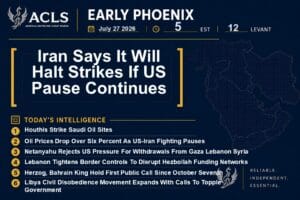
Iran Says It Will Halt Strikes If US Pause Continues
Iran will suspend military strikes as long as the United States maintains its pause in airstrikes, a senior Iranian official told Reuters. Washington halted bombing after 13 nights to allow more time for diplomacy, though Tehran remains skeptical the pause signals a lasting policy shift and warned it would resume attacks if US strikes restart.
Iran FM Blames Ukraine For Iranian Vessel Attack, Vows Retaliatory Response
Iran’s Foreign Minister Abbas Araghchi accused Ukraine of striking an Iranian commercial vessel in the Caspian Sea at Israel’s behest, killing one sailor and injuring several others. Tehran condemned the attack, summoned Ukraine’s chargé d’affaires, and vowed retaliation, while Ukrainian President Volodymyr Zelensky said the targeted vessels were transporting Iranian military cargo.
Scandal Rocks Iran’s Secret Oil Money Network as Billions go ‘Missing’
Iran faces mounting scrutiny after officials acknowledged at least $1.6 billion in oil revenues was misappropriated through a secret sanctions-evasion network of trusted intermediaries. Authorities opened 59 criminal cases, arrested several suspects, and sought Interpol notices for 15 fugitives. The scandal exposed weak oversight of the trustee system used to transfer oil revenues outside the global banking system.
============
★U.S.A.
Trump Threatens Strike On Iran’s Kharg Island Oil Export Hub
US President Donald Trump posted AI-generated images threatening strikes on Iran’s Kharg Island, the country’s main oil export terminal, and depicting attacks on Iranian oil tankers. The posts followed reports that Washington paused military operations near the Strait of Hormuz after advisers recommended suspending further strikes.
China, Pakistan Push To Restart US-Iran Talks
China, in coordination with Pakistan, is leading diplomatic efforts to reduce tensions between the United States and Iran and pave the way for renewed indirect talks, according to senior sources. The initiative focuses on confidence-building measures, the Iranian nuclear program, regional security, sanctions relief, and broader regional participation, including Gulf states.
Oil Prices Drop Over Six Percent As US-Iran Fighting Pauses
Oil prices fell more than 6% after the United States and Iran paused military strikes over the weekend, boosting hopes for renewed diplomacy and easing supply concerns. Brent crude dropped below $91 a barrel despite continued disruptions to shipping through the Strait of Hormuz and renewed Houthi attacks affecting Red Sea energy routes.
============
★ GULF STATES
Houthis Strike Saudi Oil Sites As US Pauses Iran Airstrikes
Houthi forces targeted Saudi Aramco oil facilities in Jizan and Yanbu, damaging fuel infrastructure and threatening Red Sea energy routes, while Saudi and allied defenses intercepted additional missiles. The attacks came as the United States paused airstrikes on Iran for the first time in two weeks, signaling a possible diplomatic opening despite escalating regional tensions.
Herzog, Bahrain King Hold First Public Call Since October Seventh
Israeli President Isaac Herzog and Bahrain’s King Hamad bin Isa Al Khalifa held their first publicly disclosed call since October 7, reaffirming support for the Abraham Accords and regional cooperation. The leaders discussed Middle East stability and wished Prime Minister Benjamin Netanyahu success ahead of his upcoming meeting with US President Donald Trump.
Oman, Iran Advance Hormuz Talks With Regional Navigation Alliance Proposal
Oman and Iran made progress in talks on managing navigation through the Strait of Hormuz, with Muscat proposing a regional alliance to provide maritime services and a voluntary payment mechanism for transiting vessels. Technical negotiations continue on coordinating shipping lanes while maintaining current navigation arrangements through the strategic waterway.
==============
★ ISRAEL
Netanyahu Rejects US Pressure For Withdrawals From Gaza Lebanon Syria
Israeli Prime Minister Benjamin Netanyahu said he will reject any US demands for broad withdrawals from Gaza, southern Lebanon, and Syria ahead of talks with President Donald Trump. He also pledged to press for continued monitoring of Iran’s nuclear program and warned Israel would respond forcefully to any future Iranian attack.
==============
★ IRAQ
Iraq, Lebanon Expand Strategic Partnership Through Energy And Trade Links
Iraqi Prime Minister Ali Al-Zaidi and Lebanese Prime Minister Nawaf Salam discussed renewing Iraq’s fuel supply agreement and expanding economic cooperation. The talks focused on using Lebanon as an additional Iraqi trade corridor to the Mediterranean while advancing regional integration projects in energy, transport, and telecommunications.
Coalition Downs Drone Near Erbil Airport
Coalition air defenses intercepted and destroyed a drone near Erbil International Airport on Monday without causing casualties or damage, according to an Iraqi security source. The drone’s origin and intended target remain unknown. The incident follows a similar interception near the US Consulate two days earlier, as investigations into repeated drone attacks continue.
==============
★ LEBANON
Lebanon Tightens Border Controls To Disrupt Hezbollah Funding Networks
Lebanese authorities have tightened control over ports, the airport, and border crossings, significantly restricting Hezbollah’s logistical and financial networks, according to security sources. Enhanced inspections, anti-smuggling measures, staff reshuffles, and stricter border enforcement have reduced illicit cash, gold, and contraband flows, while Syria’s changing security landscape has further weakened the group’s supply routes.
==============
★ EGYPT & NORTH AFRICA
Egypt Oil Production Surge Strengthens Energy Security Despite Regional Turmoil
Egypt raised crude oil production by 20% to 520,000–550,000 barrels per day, reaching its highest level in nearly two years after settling payments to foreign partners. The increase attracted new investment, expanded exploration and production, lifted refinery utilization to 80%, boosted petroleum product exports, secured domestic gas supplies during peak demand, and reduced reliance on imports.
Libya Civil Disobedience Movement Expands With Calls To Topple Government
Civil disobedience and protests expanded across Tripoli as new districts joined calls to overthrow Libya’s Government of National Unity over worsening electricity outages and public services. Demonstrators shut government institutions, roads, and key facilities while demanding accountability for corruption. Authorities warned against attacks on state institutions and pledged legal action against security violators.
==============
★ Disclaimer: This publication is a digest of various news sources compiled by the Early Phoenix team and edited by Rania Kisar. The items are curated, concise summaries of news items hyperlinked within each story. The items and summaries presented do not necessarily represent the views of the American Center for Levant Studies.