★IRAN
-
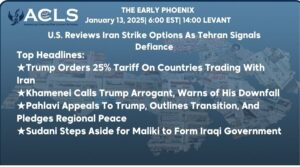
U.S. Reviews Iran Strike Options As Tehran Signals Defiance
US President Donald Trump said the military is reviewing “very strong options” against Iran over its deadly crackdown on protesters, while claiming Tehran has sought negotiations, as activists reported at least 544 killed amid internet blackouts and nationwide unrest. In response, Iranian Foreign Minister Abbas Araghchi said January 12 Iran is prepared for war if the United States pursues military action, while claiming communication channels with Washington remain open and expressing willingness for nuclear talks without threats.
-
Trump Orders 25% Tariff On Countries Trading With Iran
President Donald J. Trump announced that effective immediately, any country conducting business with the Islamic Republic of Iran will face a 25 percent tariff on all trade with the United States, emphasizing the order is final and binding. Mike Waltz confirmed the policy in a social media post, noting that China has reportedly purchased roughly 90 percent of Iran’s illicit oil for years, while Senator Lindsey Graham praised Trump’s “decisive leadership” in isolating the regime economically and called for targeted military action against Iranian forces killing protesters. The White House also confirmed that Vice President JD Vance is 100% aligned with Trump on potential responses to Iran’s protest, posted on X Benny Johnson responding to fake news that alleged that Vance was leading a team advocating for diplomacy as a first step.
-
Khamenei Calls Trump Arrogant, Warns of His Downfall
Iran’s Supreme Leader Ali Khamenei mocked US President Donald Trump as “arrogant and conceited,” warning he would face the fate of past tyrants, after Trump threatened possible military action over Iran’s deadly crackdown on protests, as tensions escalated alongside warnings of cyber or military responses from both sides.
-
Iran Intensifies Crackdown as Protests Persist Beyond Isfahan
Protests reportedly continue tonight in Tehran, Mashhad, and Tabriz alongside Isfahan, per eyewitness accounts and opposition media alleging crowds chanting anti-regime slogans despite gunfire and internet blackouts. Iranian state media claims limited gatherings occurred in Tehran’s Navvab and Saadat Abad districts, Hafjan, and Taybad, where security forces dispersed demonstrators.
-
Ahvaz Protests Escalate With Fatal Police Fire Detentions
Key events report four nights of demonstrations in Ahvaz through January 12, 2026, alongside Abadan in oil-rich Khuzestan as protesters filled streets chanting anti-Khamenei slogans amid total internet blackouts. Regime forces allegedly killed an Ahwazi child and three men with police fire in nearby Al-Howeyzeh while conducting mass detentions of Arab demonstrators and burning government buildings in IRGC-Basij clashes.
-
Pahlavi Appeals To Trump, Outlines Transition, And Pledges Regional Peace
Exiled Iranian crown prince Reza Pahlavi urged former President Donald Trump to support Iran’s liberation, praising his “peace and anti-evil” record and claiming Iranians now “rename streets after Trump.” Pahlavi said a U.S.-Iran partnership could “make Iran great again,” adding he is ready to return “at the first opportunity” with a prepared transition team. He told Fox News a short, internationally monitored transition—lasting “a couple of years”—would ensure democratic elections and transparency. Pahlavi vowed Iranians were “prepared to die” to topple the regime, promising a future of “tranquility and good relations” with Israel, Arab neighbors, and the wider world. He rejected unequal Chinese and Russian concessions, saying future governments would review any “unfair, lopsided arrangements” in parliament. Pahlavi endorsed firm U.S. action if Khamenei’s forces attack civilians or American bases, claiming Iranians view America as their “friend” and not their enemy.
-
Tehran Times and Tasnim Agency Taken Down, Blame U.S.
Iranian officials claim nationwide internet blackouts have left outlets including Tehran-hosted sites like Tehran Times and IRGC-linked Tasnim inaccessible, accusing the United States and foreign elements of exploiting unrest to disrupt domestic media and communications, according to Iranian Foreign Ministry statements and Tasnim reporting.
===========
★IRAQ
-
Sudani Steps Aside for Maliki to Form Iraqi Government
Iraqi Prime Minister Mohammed Shia al-Sudani has agreed to relinquish his right to form the next government in favor of former premier Nouri al-Maliki, despite winning the most seats, in a move aimed at avoiding political deadlock but deepening divisions within the Shiite Coordination Framework and raising concerns over opposition from religious authorities and rival factions.
-
Iraq Repatriates Six Thousand Nationals From Syria Al-Hol Camp
Iraqi authorities will transfer approximately 6,000 nationals from Syria’s al-Hol camp to Iraq in early February, completing repatriation of remaining Iraqis there, Al Arabiya/Al Hadath report. Iraqi officials previously reported 12,600 Iraqis in al-Hol and Roj camps, with about 6,000 remaining as of August 2025. Since 2021, Iraq has repatriated over 15,000 citizens with Syrian Democratic Forces cooperation, according to Iraqi and UN statements.
===========
★ TURKIYE & SYRIA
-
Turkiye Warns Against Foreign Intervention in Iran Unrest
NATO member Turkiye publicly cautioned against external interference in Iran’s domestic protests, emphasizing that foreign pressure could worsen regional instability and calling for dialogue. This positions Türkiye as advocating de-escalation and potentially seeks to mitigate broader Middle East tensions that could impact U.S. interests.
-
Syrian Army Secures Aleppo Periphery After Kurdish Fighters Evacuate
Final SDF fighters evacuated Aleppo’s Sheikh Maksoud and Ashrafiyah districts January 11 under U.S.-mediated ceasefire, ending nine days of clashes displacing over 140,000. The Syrian army deployed reinforcements overnight to rural areas including Maskana and Deir Hafer, warning of a violent response to any SDF regrouping attempts. Engineering units dismantled explosives, seized drones and IEDs from cleared neighborhoods while restoring water to three million residents. Approximately 119,000 remain displaced in Aleppo Governorate awaiting UXO clearance; the Interior Ministry monitors additional SDF and former regime elements in the eastern countryside.
-
US and Jordan Launch Strikes Against ISIS in Syria
The US and Jordan carried out large-scale airstrikes across Syria on Saturday, targeting ISIS in response to a December 13 Palmyra attack that killed two US soldiers and a civilian interpreter. Part of Operation Hawkeye Strike, the strikes hit multiple targets, following previous US, UK, and French operations against the still-active ISIS in Syria’s desert regions.
-
Syria Recovers €32 Million From Rifaat Assad’s Assets in France
Syria has recovered €32 million from assets seized from Rifaat Assad in France, marking the first financial restitution since the fall of the former regime. Lawyer Mazen Darwish stated that the transfer marks the first installment in a broader legal process aimed at reclaiming looted funds and allocating them to justice, victim compensation, and transitional justice efforts, without any political conditions from France.
-
Syrian Authorities Arrest Suspects In Deadly Homs Alwite Mosque Bombing
Syrian Interior Ministry officials said security forces arrested perpetrators of the December bombing at Imam Ali Bin Talib Mosque in Homs’ Wadi al-Dahab neighborhood, which killed eight people and injured 18. An extremist group calling itself Saraya Ansar al-Sunna claimed responsibility, while Syrian authorities asserted ISIS involvement.
===========
★LEBANON
-
Cryptocurrency, Passports Reveal Hezbollah–Venezuela Ties
US investigators and former officials say Hezbollah built deep networks in Venezuela under Hugo Chávez and Nicolás Maduro, using Venezuelan passports, state airline flights, cash smuggling, and cryptocurrencies to finance operations, traffic drugs, and move fighters, with evidence pointing to official protection and continued activity despite past investigations.
-
IDF Strikes Hezbollah Weapons Sites in Southern Lebanon
The Israel Defense Forces carried out airstrikes on a Hezbollah weapons site in Kfar Hatta, southern Lebanon, after Israeli intelligence contradicted the Lebanese Army’s prior assessment that the area was clear. The strikes destroyed underground weapons facilities, with secondary explosions observed, following warnings to residents, as Israel cited Hezbollah’s ongoing violations of ceasefire agreements and threats to its security.
==========
★EGYPT
-
Libya’s Haftar Jr. Discusses Military Cooperation With Egypt in Cairo
Libyan Armed Forces Deputy Commander Sadam Haftar visited Cairo for talks with Egyptian Defense Minister Abdel Maged Saqr, focusing on military cooperation, regional security developments, and strengthening bilateral defense ties, as senior military officials from both countries emphasized coordination to support stability and security in Libya and the region.
-
Egyptian Chambers Visit Damascus To Engage Shar’a Regime
Egypt dispatched the Chambers of Commerce delegation to Damascus January 12, marking the first high-level economic contact since Ahmed al-Shar’a’s government formation post-Assad. Shar’a hosted the group at the Syrian-Egyptian Economic Forum, declaring restored ties essential for regional stability while praising Sisi’s infrastructure achievements. He proposed cooperation across energy, gas exploration, railways, ports and trade corridors to leverage Egypt’s development experience. Egyptian ex-MP Imad Jad dismissed overture as damage control for Shar’a’s prior Gulf-favoring remarks ranking Cairo below Riyadh developmentally. Syrian analyst Ghasan Mahmoud blamed Egypt’s post-Assad hesitancy despite Damascus’ repeated positive signals absent official visits.
============
★ISRAEL
-
Argentina Suspends Embassy Move After Israel-Falklands Oil Dispute
Argentina has halted plans to relocate its embassy in Israel to Jerusalem following tensions over Israeli-owned Navitas Petroleum’s planned offshore oil drilling near the Falkland Islands, scheduled for 2028; Buenos Aires claims the project violates its sovereignty and a 1976 UN resolution, despite Israeli reassurances that it has no control over Navitas, raising concerns about potential damage to bilateral relations under President Javier Milei.
-
IDF Launches Five-Year Plan Expanding AI Robotics Space Warfare
Israeli military officials said IDF Chief of Staff Lt. Gen. Eyal Zamir launched processes to implement a 2026–2030 multiyear plan expanding artificial intelligence, robotics, space operations, and air defense, according to IDF statements. The plan includes developing a defensive “beeper” concept, autonomous systems integration, and enhanced laser and missile defenses. Officials said implementation begins April 1, supported by long-term national funding, while future U.S. military assistance levels remain under negotiation.
-
Coalition Advances Bill Repealing Fraud Charges Against Prime Minister
Israel’s governing coalition introduced legislation to abolish fraud and breach of trust as criminal offenses, charges currently facing Prime Minister Benjamin Netanyahu in multiple cases, according to Israeli media reports. Bill sponsors argue the offenses enable selective enforcement and undermine legal certainty. The proposal was submitted to parliament on January 12 and would apply prospectively if enacted, while Netanyahu’s trial remains ongoing under existing law, officials said.
-
Israel, Germany Deepen Security and Defense Cooperation Against Iran
Israel and Germany agreed to expand counterterrorism, cyber, and advanced technology cooperation while signing a $3.1 billion deal to expand the Arrow 3 missile defense system, raising total defense agreements to over $6.5 billion and reinforcing their strategic partnership during concerns over threats from Iran and its allies.
-
Hamas Prepares to Cede Gaza Power Under Ceasefire Plan
Hamas said it has instructed its Gaza government agencies to prepare to hand over authority to an independent Palestinian technocratic committee as part of a US-backed ceasefire plan, while retaining its weapons during ongoing negotiations led by Egypt and international mediators.
===========
THE GULF & YEMEN
-
Saudi Arabia Leads Gulf Shield Exercise Strengthening Regional Deterrence
Saudi Arabia concluded “Gulf Shield 2026,” a joint Gulf air force exercise testing interoperability, multi-dimensional threats, and command responsiveness, highlighting unified deterrence and operational cohesion amid regional security challenges, including drones and ballistic missiles, with a final joint air demonstration showcasing advanced coordination and reinforcing stability across the Gulf Cooperation Council states.
-
Saudi Conducts Two Major Diplomatic Initiatives With US, Japan
Between January 7 and January 12, Saudi Arabia launched two major activities: in Washington, Foreign Minister Faisal bin Farhan met US House Foreign Affairs Committee leaders, reviewing bilateral relations, regional security, and shared interests ahead of talks with Secretary Marco Rubio. Separately, this Monday, in Riyadh, Saudi Arabia and Japan signed 12 memoranda of understanding across space, finance, agriculture, technology, education, water, and manufacturing, advancing Vision 2030 objectives and strengthening private-sector investment cooperation and strategic economic partnership.
-
Yemen Forms Coalition-Led Military Committee to Unify Forces
Yemen’s Presidential Leadership Council chief Rashad al-Alimi announced the creation of a coalition-led supreme military committee to unify and command all armed forces in preparation to restore state institutions, while reaffirming support for southern dialogue and urging the UAE to allow council member Faraj al-Bahsani to travel to Riyadh.
=============
★ Disclaimer: This publication is a digest of various news sources compiled by the Early Phoenix team and edited by Rania Kisar. The items are curated, concise summaries of news items hyperlinked within each story. The items and summaries presented do not necessarily represent the views of the American Center for Levant Studies.