

★USA
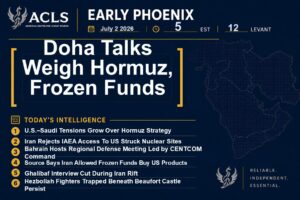
Doha Talks Weigh Hormuz, Frozen Funds
U.S.-Iran talks in Doha focused on keeping the Strait of Hormuz open and resolving frozen Iranian assets, while a reported one-week de-escalation gives mediators room to test the framework. Reuters said the talks produced no major breakthrough toward a long-term deal, and Axios said Washington is pressing Tehran to drop proposed Hormuz tolls by arguing a nuclear agreement would offer greater economic gains. The pause may stabilize shipping, but leaves core nuclear and sovereignty disputes unresolved.
U.S.–Saudi Tensions Grow Over Hormuz Strategy
Fox reported that U.S.–Saudi relations have become strained over Washington’s Hormuz strategy, including an earlier Trump plan to reopen the strait using U.S. military escorts and Saudi bases without Riyadh’s consent. The plan, described as Project Freedom, was reportedly dropped, but Saudi officials were said to feel further sidelined after Secretary of State Marco Rubio passed over the kingdom during his Gulf tour.
===========
★IRAN
Ghalibaf Interview Cut During Iran Rift
Iranian state television stopped a recorded interview with Parliament Speaker and chief negotiator Mohammad Bagher Ghalibaf, prompting a public objection from parliament’s media center. The center said the interview was delivered to IRIB more than two hours before broadcast but was halted midway without coordination. It said the omitted sections covered IAEA inspections, frozen assets, reconstruction financing, Trump’s claims, and the leader’s message on the U.S.-Iran framework.
Iran Rejects IAEA Access To US Struck Nuclear Sites
Iranian parliamentary speaker Mohammad Bagher Ghalibaf said IAEA inspectors will not be allowed to access nuclear sites bombed by the US, including Fordow, Natanz, and Isfahan, calling reports of access “false.” He said inspections are limited to Bushehr and the Tehran reactor, while IAEA chief Rafael Grossi insisted full access is required under agreement.
Araghchi Threatens to ‘School’ Israel if US Unsuccessful in ‘Muzzling its Pets in Tel Aviv’
Araghchi threatened to ‘school’ Israel if the US fails to restrain it under a new US-Iran MoU, responding to Israeli Defense Minister Israel Katz’s claim that Supreme Leader Mojtaba Khamenei is marked for death. He warned of strong retaliation and cited agreement terms banning military escalation. Israel reaffirmed it will prevent Iran from acquiring nuclear weapons.
Source Says Iran Allowed Frozen Funds to Buy US Products
A senior source told Al Arabiya that an agreement allows Iran to use part of its frozen assets to purchase US agricultural products, with no cash transfers permitted. The spending will be strictly limited to US farm goods. The report comes amid ongoing talks involving billions in Iranian frozen funds and broader negotiations over regional stability and sanctions relief.
===========
★LEBANON
Israeli Estimates Hezbollah Fighters Trapped Beneath Beaufort Castle Persist
Israeli estimates say 30–40 Hezbollah fighters remain trapped in tunnels beneath Beaufort Castle and the Ali al-Taher ridge. Israel said it killed 10 armed militants attempting a rescue and controls all tunnel entrances. It believes Hezbollah is avoiding attacks to prevent renewed fighting despite the recent U.S.-brokered 14-point Lebanon ceasefire agreement.
Lebanon Estimates War Cost Exceeding 8 Billion Dollars
Lebanese Economy Minister Amer Bsat said the latest war has cost Lebanon around 7% of GDP, roughly $2 billion in lost output so far, with total damages potentially exceeding $8 billion. He cited widespread destruction, inflation, and reduced consumption, while outlining funding sources including the private sector, diaspora remittances, and international aid efforts.
===========
★THE GULF
Bahrain Hosts Regional Defense Meeting Led by CENTCOM Command
Bahrain hosted a CENTCOM-led regional security dialogue with defense leaders from 12 Middle Eastern countries, chaired by Adm. Brad Cooper. Talks focused on regional threats, cooperation, and ensuring freedom of navigation in the Strait of Hormuz. The meeting highlighted first-time participation by Syria and Lebanon and reinforced joint air and missile defense coordination.
Oman and Britain Discuss Maritime Security And Regional Stability Cooperation
Omani Foreign Minister Badr Albusaidi and British Home Secretary Yvette Cooper discussed strengthening strategic cooperation, regional developments, preventive diplomacy, and maritime security during talks in London. They stressed protecting navigation, global supply chains, and international trade while expanding bilateral coordination. The meeting followed Oman’s recent Hormuz committee talks with Iran and Muscat’s rejection of transit fees through the strait.
- UAE Breaks Oil Export Records With June Surge Data
Preliminary data from Kpler and Vortexa shows UAE crude and condensate exports hit a record high in June, marking an unprecedented surge. The increase follows recent policy adjustments and reflects stronger supply flows. The growth is supported by advanced logistics, alternative transport routes, and ADNOC spot sales aimed at expanding market reach and competitiveness.
===========
★ Disclaimer: This publication is a digest of various news sources compiled by the Early Phoenix team and edited by Rania Kisar. The items are curated, concise summaries of news items hyperlinked within each story. The items and summaries presented do not necessarily represent the views of the American Center for Levant Studies.