

★USA
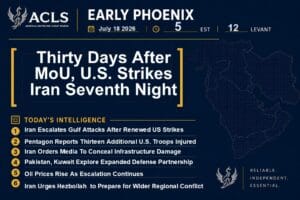
Thirty Days After MoU, U.S. Strikes Iran Seventh Night
CENTCOM launched a new wave of strikes against Iran at approximately 3 p.m. EDT, marking the seventh consecutive night of attacks. CENTCOM said operations targeted Iran’s ability to monitor the Strait of Hormuz and reinforce coastal military positions, confirming that the campaign is increasingly focused on weakening Tehran’s control of the waterway. The strikes destroyed five bridges around Bandar Abbas, coastal surveillance towers, radars, command networks, ports, and IRGC maritime assets. Defense Secretary Pete Hegseth underscored the objective after the Chabahar surveillance-tower strike, declaring that Iran does not control the strait. Iranian media reported strikes or explosions around Sirik in Hormozgan Province, Ahvaz in Khuzestan Province, and Yazd in central Iran.
Pentagon Reports Thirteen Additional U.S. Troops Injured
Pentagon casualty records released Friday showed that the number of American personnel injured during the Iran war had increased by 13 since Monday, including ten Army soldiers and three Navy sailors. The Pentagon did not identify where or exactly when the injuries occurred, so they cannot be attributed specifically to attacks during this 12-hour window.
Oil Prices Rise As Escalation Continues
Brent crude settled at $88.10 per barrel, rising more than 4%, while U.S. crude closed at $82.49. Markets reacted to the seventh U.S. strike wave, reduced traffic through the Strait of Hormuz, and concerns that the conflict could spread to the Red Sea.
===========
★IRAN
Iran Escalates Gulf Attacks After Renewed US Strikes
Iran launched renewed attacks on US Gulf allies after a week of American strikes on Iranian military sites. Kuwait reported damage to a desalination facility and airport disruptions, while Bahrain faced reported threats. The escalation raised concerns over civilian infrastructure and wider regional conflict.
Iran Orders Media To Conceal Infrastructure Damage
Iran International reported that Tehran’s Supreme National Security Council instructed domestic media to limit reporting on damage to civilian infrastructure and public services following U.S. strikes. According to the reported directive, outlets were told to avoid publishing information that could help the enemy assess strike effectiveness and to rely on designated government officials for casualty and damage updates.
Iran Urges Hezbollah to Prepare for Wider Regional Conflict
Iran reportedly instructed Hezbollah and other regional allies to prepare for a broader conflict as fighting with the United States intensifies, warning Israel could become directly involved.
===========
★GULF STATES
Pakistan, Kuwait Explore Expanded Defense Partnership
Pakistan and Kuwait are negotiating an expanded defense partnership linked to energy cooperation and investment, according to sources. Kuwait seeks enhanced military support, including defense procurement, while Pakistan has ruled out deploying combat troops at this stage. Talks remain preliminary and may accelerate after US-Iran tensions ease, as both countries explore deeper strategic and energy cooperation.
===========
★LEBANON
Lebanon’s Aoun Visits Washington Following Progress in Rome Talks
Lebanese President Joseph Aoun traveled to Washington after positive progress in indirect Lebanon-Israel talks in Rome to discuss implementing a framework agreement covering a phased Israeli withdrawal and Lebanese army deployment. Key disputes remain over withdrawal conditions and guarantees preventing Hezbollah military activity in southern Lebanon.
===========
★IRAQ
Iraq Syria Sign New Oil Pipeline Agreement Backed By Washington
Iraq and Syria signed an agreement to build a new oil pipeline with US backing, reviving Iraqi crude exports through Syrian territory. The project aims to diversify Iraq’s export routes, reduce reliance on Gulf shipping, and strengthen regional economic cooperation. The deal was signed during Iraqi Prime Minister Ali al-Zaidi’s visit to Washington.
===========
★ Disclaimer: This publication is a digest of various news sources compiled by the Early Phoenix team and edited by Rania Kisar. The items are curated, concise summaries of news items hyperlinked within each story. The items and summaries presented do not necessarily represent the views of the American Center for Levant Studies.